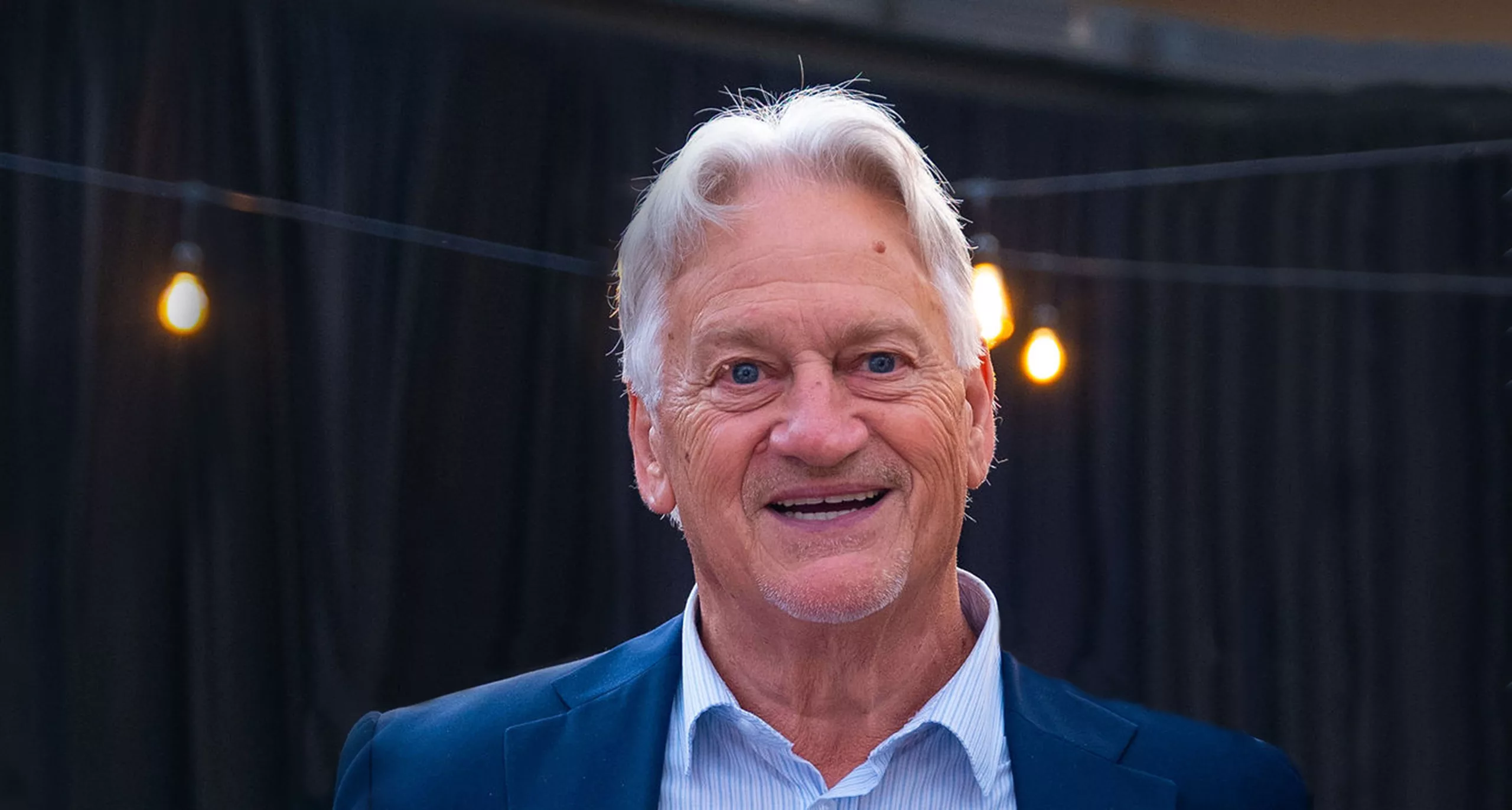

Interview with Masaaki Imai

What kind of relationship did you have with Taiichi Ohno?

I had the privilege of being very close to Taiichi Ohno. In fact, I traveled with him on a trip to the United States, also to New Zealand, and to Australia. At the time I was developing the Kaizen concept throughout the world, and of course one of the best ways to do that was to bring Mr. Ohno with me to give seminars and lectures. I organized a very special event in Chicago in the 1980s, and also in New Zealand and Australia.

Since Ohno was not too eager to go abroad – I think perhaps for health reasons and so on – I had to talk him into it. Knowing that he was very fond of playing golf, I used that as a good reason why he should go to these cities.  So I also had the great privilege of playing golf with him.

Was he a good golfer?

Oh yes, he was very good. In fact, he was an all-round good sportsman.

What other personal interests did he have? Did he read much?

Oh, of course, of course. In order to explain what he was doing for people, he often referred to the local history of whatever region he was in Japan.  He was a very curious reader, and he was very knowledgeable about a region's history.

You know, his father was a politician. So I'm sure that he had more than enough capacity to be a statesman. But that was not his ambition. He was too interested in his own job.

What was he like to converse with?

He didn't say much. Actually, he much preferred to listen.

Is this why people were afraid of him, because they thought maybe he was watching them closely?

(Laughs.) Maybe. But also, because he had such a high expectation of the staff and managers under him.  If they were not doing something the right way, he would explode. And when he exploded, he really would explode.

But for those who came to him and really asked for help, he was very patient.  He wouldn't give them the answer, but preferred to provide them with enough of an understanding of the situation, as well as help on how they could deal with the problem. So he was very much a teacher and a leader.

How did Mr. Ohno start his career?

When he got out of school, the first company he joined was the Toyoda Automatic Loom Company. Later on, Toyota Motor Corporation was started. Initially it was started as a branch of the Automatic Loom Company, but eventually it became so big that it swallowed the mother company. So Ohno was moved to Toyota Motor Corporation.

How did he start developing the Lean methods?

At one time, he was the manager in charge of a machine shop, and he understood that in the machine shops typically one operator was assigned to one machine. But from the standpoint of people’s efficiency, he noticed that each operator had a lot of idle time while the machine was working. So experimentally, he assigned two machines to one operator to see how that could be done.  Then, after very careful observation, he was able develop several methods that made this possible for all workers. To do this they needed to standardize the work procedure, and that’s when he first introduced standard work. Then he increased the number of the machines to three, and in about six months one operator was taking care of four machines.

But he soon realized that in order for one person to take care of four different machines there were still problems, because each machine had a different speed of operation. Naturally each machine has a different operational time, meaning there isn't a smooth flow – there was always some staggering of the work.

Ohno did not invent multiple machine handling, but he did come up with the idea of multiple process handling. In other words, one operator should take care of several processes. Not the machine, but the processes. And in order to be able to be flexible and efficient, again there are certain things that are very important. For example, each process has to have the same operational time. To do that, processes have to be placed next to each other in order to avoid wasted motion.

Did Ohno see flow as the key to maximizing efficiency?

Yes. Every time he came to the plant, he would say, "Let's make a flow. You have to make a flow to become more efficient." And I think even to this day, making that flow is the real central issue for so many businesses. Not just in the production, but in the service sectors as well. You have to look at the flow, because it helps you to identify the variables, the problems.

How did these methods gain such wide acceptance?

Well, shortly after Toyota started production there was a big recession. The company almost went bankrupt. Because of this, Toyota received some banking help, but that help came with several conditions. Besides being forced by the banks to fire many employees, Kiichiro Toyoda, who was the President, had to retire.

Shortly after these actions were taken the Korean War started.  Toyota was making trucks in those days, and Toyota and other companies like Nissan and Subaru received big orders from the American military forces. You know, they received almost twice as many orders than they normally did. But because of the conditions of the bank loans, Toyota was not allowed to hire any additional people. They had to improve productivity with the current number of people.

And how did they do it? Well, because some of the supervisors were gone and there were not enough people left on the shop floors, Ohno hand picked several young guys with technical backgrounds, and started to introduce some of the new processes that he had developed through these guys. He gradually developed these people, and through them he was able to introduce these processes throughout Toyota. Later on he extended this to the major suppliers of Toyota, and these disciples of Ohno were sent to help the suppliers, to introduce the new practices, such as Flow Production, Pull Production, Kanban, and Supermarket.

So he must have taught a lot of people?

There are countless numbers of people who have been guided by Ohno. They are everywhere. I think perhaps one of his biggest contributions was to develop all those people. First within Toyota, and then outside of Toyota and Toyota's suppliers.

How did workers on the shop floor respond to all this?

When you introduce Kaizen, the workers are the most grateful recipients of this improvement. They find that because of the various standardized work introduced - because things become much more regimented and well managed - they can carry on with their work without any surprises. And the result is a much more satisfying job. Workers are the greatest recipients of Kaizen work.

Was worker engagement important to Mr. Ohno?

Of course.  Because the worker who only spends part of his time doing his job does not feel very useful - his work does not feel meaningful. But if one person can take care of several processes, then his job has more meaning. As a result, the corporate performance improves, and society also benefits as a result.

For Ohno, the productivity was not so much on the machine but on the people, you know, a human being's performance.

I’ve read that when there were problems, he didn't blame the workers, he blamed the processes.

Yes. It is not the workers you blame, it is the management.

Did he ever have to confront workers over any major issues?

In 1950, during the recession, there was a labor and management confrontation. Key managers were called up to come to a meeting, and Ohno was one of them because at that time Ohno was trying to introduce multiple machine handling, and multiple process handling.

Anyway, there was a big crowd of union members at the convention, and only two or three people were standing up on the platform, and the union people were accusing Ohno and other people of exploiting their labor. The workers knew the main reason for this meeting; Toyota had to fire 1600 people. This was not Toyota management’s desire, but that was the agreement they had with the banks, you know. Anyway, Ohno was regarded as the enemy, because of what he had been doing.

So how did he handle that?

People who heard him speak still recall that he was very firm, and every time he would stand up he would never wince, never compromise, and he kept saying, "Don't you know that we have a crisis now, and if we don't review our position, and improve our operations there will be no future? This is a time where we really have to face up, we really have to change the way we do our jobs." He kept repeating the same message.

In those days people would throw things at the speakers on the platform.  Because of this, whenever managers went to large meetings they would wear a hard hat. But Ohno wouldn’t wear one.  He said, "If you want to hit my head, do it.  I am not afraid."

It sounds like he was totally committed to what he was doing.

He was a very determined person. Throughout his career he was devoted to following the idea of KAIZEN. Even on his deathbed he was trying to introduce some KAIZEN ideas to the hospital he was staying at.

In a few words, how would you summarize Mr. Ohno's contribution?

In Japan, we have what you call "Japanese spirit." Never yield. Never stop. Never cease to make an effort. That's Japanese spirit. In Mr. Ohno’s later years, often after he had given some lecture or speech in public, people would ask him to write something for a memento.  Often he would write "KAIZEN spirit." That very much stratified his way of thinking.  The "KAIZEN spirit."

Mr. Ohno made KAIZEN a reality by developing the Toyota Production System.

The Toyota Production System is nothing but KAIZEN.

Get our KAIZEN Newsletter

Please enter your name and email address to subscribe to current news and fascinating topics from the world of KAIZEN in our monthly newsletter.

Contact

CEO: Danie Vermeulen; 0274 366664
Email: dvermeulen@spam.kaizen.com

Richard Steel; 0274 515298
Email: rsteel@spam.kaizen.com

KAIZEN Institute NZ
15a Vestey Drive, Mt Wellington
Auckland 1060

PO Box 62561, Greenlane
1546, New Zealand

Tel: 09 588 5184